


In this article, we’ll cover how consumer expectations about fraud and fraud protection are changing, including how confident consumers are in their ability to identify scams and how they are increasingly expecting their financial institutions to shield them.
Financial institutions make modern life possible. Whether you’re visiting an ATM, buying lunch, applying for a mortgage, starting a business, or even planning your future, your financial institution plays an important role in almost every day of people’s lives. But as people’s lives are changing, so are their relationships with their financial institutions.
Consumers are demanding more value from their financial institutions, and with scams and fraud more common and more convincing than ever, consumers want their financial institutions to step into a new role: protecting them from these threats.
Here are four surprising facts about consumers and fraud and their changing expectation regarding fraud protection and prevention:
Consumers are confident they can spot scams—but the reality is much different
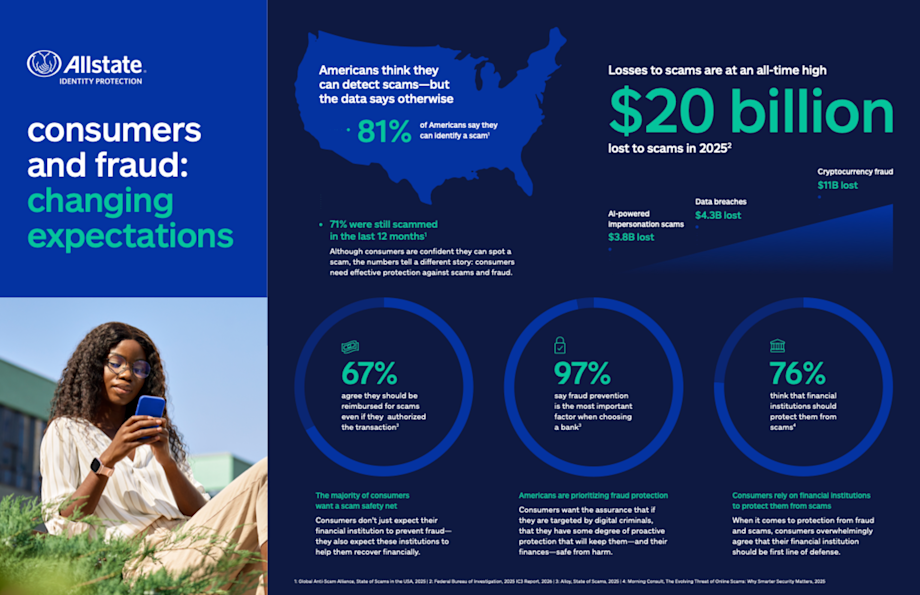
While most people are aware of how convincing scams can be these days, especially with the rise of AI, consumers are still overwhelmingly confident that they can spot a scam. In fact, 81 percent of consumers say they can spot scams. But with 71 percent of Americans saying they were scammed in the past year due to AI-powered scams and new schemes, it’s clear that consumers require effective protection against scams.
Consumers are losing more than ever to scams—and cryptocurrency scams are bringing in huge losses
Unfortunately, scammers are endlessly creative, constantly coming with new ways to trick consumers out of their money. And with losses to scams topping over $20 billion in 2025, a 26 percent increase over the year prior, it’s clear that scams are more convincing than ever.
Surprisingly, cryptocurrency scams accounted for over half of scam losses in 2025 with over $11 billion in losses. This results are clear: not only do consumers need the right education and tools to protect them from scams, but they also need financial coverage that protects their cryptocurrency as well.
Consumers are relying on financial institutions to protect them from fraud and scams
With the rise of scams, consumer expectations regarding their financial institutions are changing. 22 million Americans lost money to scams in 2025, and now many consumers are expecting that their financial institutions protect them from scams. 97 percent say fraud prevention is the most important thing when choosing where to bank, and 76 percent of consumers believe that their financial institution should protect them from scams, signaling that a majority of consumers not only recognize the threat of scams, but are looking for more protection.
Consumers want more than just prevention—they want financial protection too
Protection from scams can take many forms—education, scam detection across emails, messages, apps, phone calls, and notifications, and more.
For consumers, however, they’re looking for protection where it matters most—their finances. With 67 percent of consumers agree they should be reimbursed for scams, even when they personally authorized the transaction, it’s clear that consumers recognize how convincing scams can be and that they want coverage that will protect them in the event they fall victim to one.
To learn more about how a fraud protection and reimbursement solution can differentiate your services and help improve customer retention, visit our Business Hub.


